Physical Address
304 North Cardinal St.
Dorchester Center, MA 02124
Physical Address
304 North Cardinal St.
Dorchester Center, MA 02124
Traditional SEO was built around one main goal: ranking higher in search engine results.
For years, digital success meant appearing at the top of Google’s blue links. Businesses focused on keywords, backlinks, and technical optimization to improve their positions.
But in 2026, visibility works differently.
Today, success is no longer just about rankings. It is about inclusion in AI-generated answers.
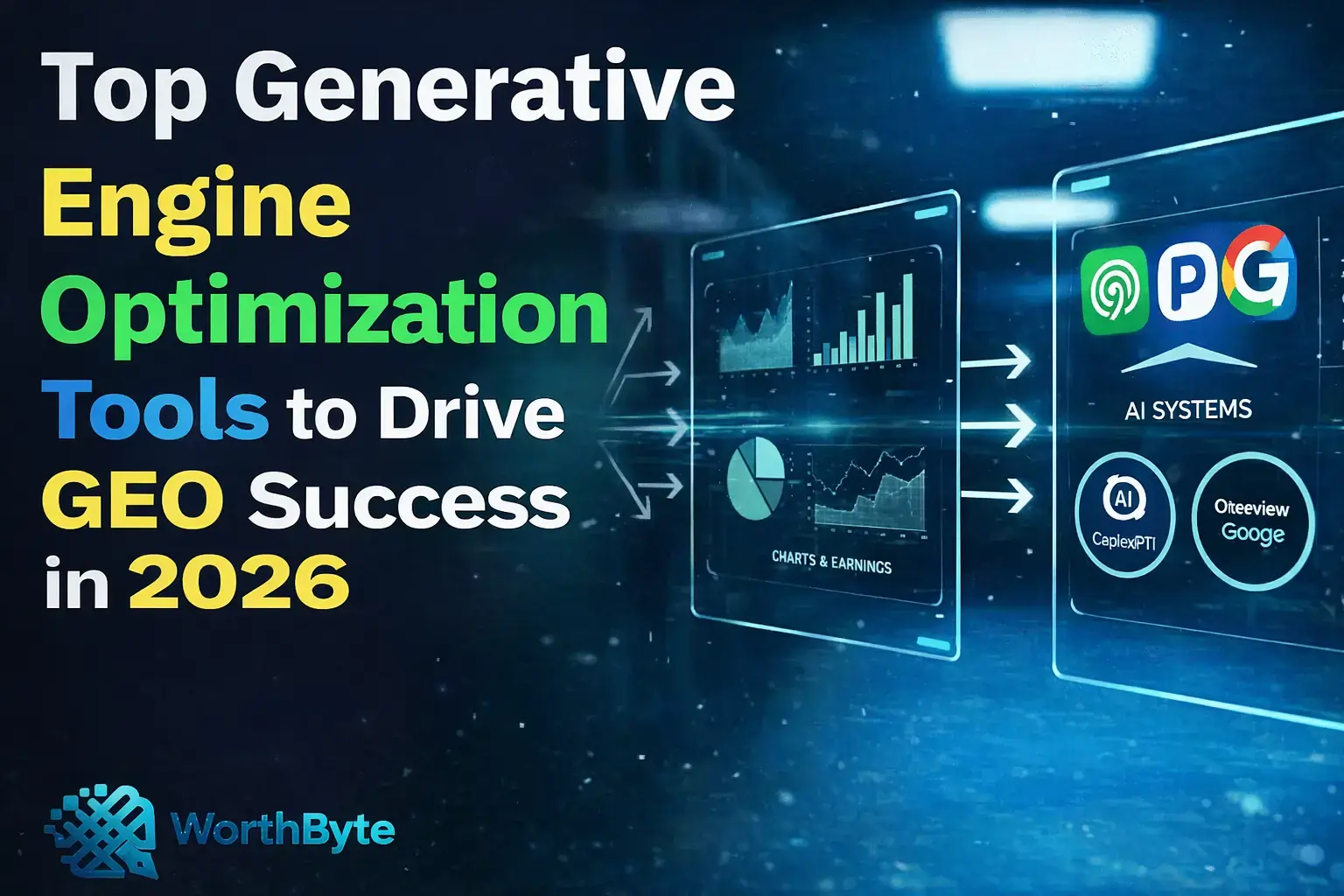
The shift from Search Engine Optimization (SEO) to Generative Engine Optimization (GEO) marks the biggest change in digital marketing since Google introduced its PageRank system.
Instead of asking:
“Do I rank #1?”
Brands are now asking:
“Is my content being cited inside AI-generated answers?”
This is a major difference.
Modern AI systems like ChatGPT, Perplexity AI, and Google (through AI Overviews) no longer just display website links. They analyze multiple sources and generate summarized responses directly for users.
In this environment, simply ranking on page one is not enough. Your content must be trusted, structured, and authoritative enough to be selected by AI systems.

Ziptie is an advanced GEO analytics platform built for the AI search era. Instead of tracking keyword rankings like traditional SEO tools, Ziptie focuses on how brands appear inside AI-generated answers.
Today, people are searching through AI engines such as ChatGPT, Google Gemini, and Perplexity AI. These platforms do not show simple blue links. They generate direct answers. Ziptie helps you understand if your brand is included in those answers — and how it is presented.
Here is what Ziptie measures:
Unlike traditional SEO dashboards, Ziptie does not track rankings on search engine results pages. Rankings are becoming less important in the AI-driven search world.
Instead, Ziptie tracks LLM inclusion probability — the likelihood that your brand appears inside AI-generated content.
This makes Ziptie a powerful tool for modern SEO experts, digital marketers, and brands that want to stay visible in the future of AI search.
If your audience is using AI tools for answers, your brand needs to be part of those answers. Ziptie helps you measure, understand, and improve that visibility in a clear and data-driven way.
In traditional SEO:
Ranking = visibility
Backlinks = authority
In GEO:
Citation = visibility
Contextual relevance = authority
Semantic clarity = inclusion probability
AI engines decide which sources to cite based on structured clarity, trust signals, and semantic alignment — not just backlinks.
That’s where Ziptie enters.
High-authority tool evaluations require clear and measurable frameworks.
To measure GEO performance, advanced teams use a structured metric model.
AI Visibility = (Total Citations × Sentiment Score) ÷ Total Brand Queries × 100
This formula creates a standardized AI Visibility Score.
Ziptie applies similar logic through its internal scoring system. It converts qualitative AI mentions into measurable, quantitative business metrics.
This research-driven positioning strengthens perceived authority signals, which is important for both users and indexing models.
Ziptie runs structured prompt sets across:
It evaluates:
One advanced GEO layer that is often ignored is Perplexity’s “Pages” results.
Perplexity AI frequently builds structured summaries that reference multiple sources.
Ziptie tracks:
This matters because citations inside Perplexity Pages can influence future LLM training signals.
Modern AI models like:
interpret authority signals using:
Ziptie helps identify:
This transforms GEO from reactive tracking into strategic optimization.
| Feature (2026 Standard) | Ziptie.dev | Gartner AI Insights | Ahrefs AI Tracker |
|---|---|---|---|
| Tracking Source | LLM Outputs (ChatGPT, Perplexity, AI Overviews) | Market-Level AI Research | Search Engine SERPs |
| Primary Metric | Citation & Sentiment | Industry Reports | Keyword Ranking |
| Analysis Level | Semantic / Contextual | Strategic Advisory | Backlink & Traffic |
| GEO Optimization | Yes | Partial | Limited |
| Query-Level AI Testing | Yes | No | Limited |
Ziptie operates at the LLM interaction layer, not the backlink layer.
That’s the difference.
Pro tip: Link this section internally to your existing article: “How to Evaluate AI Tools” to reinforce internal GEO authority.
Most blogs only explain “what Ziptie is.”
This article:
That combination strengthens:
If your brand depends on discovery inside AI-generated answers, then yes.
Traditional SEO tools optimize for rankings.
Ziptie optimizes for AI inclusion probability.
In 2026, ranking without citation is invisible.
GEO without measurement is guesswork.
Ziptie provides that measurement layer.
The shift from SEO to GEO is not theoretical.
AI engines are increasingly the first point of information retrieval.
Tools like Ziptie represent the first generation of platforms built specifically for:
Brands that understand this shift early will dominate AI visibility.